Loved by Clients. Awarded by the World.

A wise person once said, "Creative agencies desire awards. Clients desire results." As one of Pune's leading creative agencies, we strive to bridge these ends. Seagull believes in creating ideas that transform the brand category and make your brand timeless.

And the way we do this is with 'Ideas that Soar' – every idea is filtered through a sieve of sharp insights and deep consumer understanding. Some of our ideas have won at the Cannes Lions International Festival of Creativity, Goafest, IAA Olive Crown Awards, and Entrepreneur India Awards.

Project Image
Project Image
Project Image

Rise of Meme Marketing

What is a Meme?

Memes can be funny images, videos or even well-structured texts that are shared on social media with the intent of sharing humour. You can make a meme out of anything off the internet today, it may or may not be meaningful but be relatable and shareable. Everything right from a facial expression of a person/celebrity to an adorable animal video, a movie dialogue or even a snapshot of your favourite pop culture movie character can become a meme.

And the fun part is you’d find something new every day. Memes are mostly humourous, but often can also be offensive or controversial to some. They can make you happy, confused or perhaps even annoyed at times.

Image Source: Vocal.Media

In a way, memes have also become a great escape from our stressful lives and make us laugh for the split second that they appear on our phone screens. An escape that has today formed what is called ‘meme culture’. A culture that brings together like-minded people that bond over sharing memes. It’s what we call the new norm of internet friendship!.


More Helpful Stuff: What Do You Meme? Basic Bitch Expansion Pack – https://amzn.to/3hWSu55

Did you know memes can be used to market your brand?

From being meaningless pieces of humour on social media to becoming a sensational way of marketing brands and content, memes have come a long way. So much so, that a meme is no longer just a piece of content, it is an undefined internet language spoken by or communicated with amongst like-minded individuals. Memes are used by brands for promotion, launches, building brand recall value, communicating trending social ongoings and marketing.

Evolution of Memes

Image Source: Bigradar Website

Back in the day, we’ve witnessed humorous face clip arts as memes; then there was the use of viral stock images and today, we notice anything and everything can be a meme! Who would have thought a coffin dance ritual video from Ghana would become such a sensation? It’s phenomenal how the meme culture works these days and it has evolved globally!

Memes are no longer just used as online banter but they have become a powerful medium of communication with your audience- a way to advertise your brand/ product.

Today, memes can generate brand awareness, attract potential followers as well as increase your social media engagement with the existing followers of your brand and even nurture them with good content. And thus brands have now started to dedicate a marketing budget specifically for meme marketing on Facebook, Instagram and sometimes even Twitter.

A good meme has the potential to reach out to a wide audience due to its social sharing factor. If you create relatable (memes) content that communicates your brand, your followers will become your best marketers online. An avid social media consumer shares at least 10 to 30 memes per day and that generates an abundance of opportunities for you as a brand to reach out to your audience!

Meme Marketing in India

Website Source: Starfishm

India is one of those countries that embrace the meme culture with a whole heart. What’s interesting about the Indian audience is that you’d find diversity in cultures as well as demographics. However, the majority of heavy internet consumption is carried on by teenagers and young adults who are the best target audience to practice meme marketing in the country.

Platforms like Reddit, Instagram, Twitter, TikTok, Facebook, YouTube tend to support this popular culture of memes to advertise products and services for brands. Although there is still a lot of scope in this area, brands that use memes for marketing purposes tend to generate an engaging relationship with their audiences.


Related Post – Choosing the Right Digital Marketing Agency for your Brand

Brands that use Meme Marketing Successfully

Every brand is now jumping onto the meme marketing bandwagon. It is one of the most successful and most price-efficient ways of communication and engagement for brands. To be putting it in clear perspective, consumers love finding brands that tell stories, brands that they can relate to.


And what’s better than finding brands that also bring a smile or a crack a laugh once in every while. For brands, it generates a recall value in the consumers’ minds, creating a relationship to be their preference in the consideration stage of their buyer’s journey.

Here are some reputable brands that are great examples of meme marketing :

Durex:

Source: Durexindia Website

MumbaiPolice:

Image Source: Instagram/mumbaipolice

Swiggy:

Image Source: Instagram/swiggyindia

Tinder:


Image Source: Tinder Website

Netflix:

Image Source: Netflix Website

Things to consider while Meme Marketing

  1. Choosing meme templates that fit your brand image: There are hundreds of meme formats available on the internet, but not every meme fits your brand guidelines or suits your brand language. Ensuring that you pick the right style can avoid miscommunication of wrong positioning of your brand.
  2. Reacting to trending topics: Memes have trends too and sometimes a great way to put your brand out there is jumping on the trend bandwagon! If you want to reach a wider audience, trends can be a quick and easy way to go.
  3. Welcoming user-generated memes: Just as user-generated content is a metric to validate your brand engagement, so are memes. People who love to engage with your brand will willingly generate memes about/for your brand. It’s a healthy practice for your brand to share those too. You can even commission meme artists to generate regular meme content for the brand depending on your requirements. There are even dedicated companies/agencies that can help your brand to generate memes.
  4. Going for maximum creativity: When it comes to dealing with content, it’s all about quality. More creativity = higher social engagement. You don’t necessarily have to try too hard, only use your innovation and generate relatable content to give it a funny angle.
  5. Avoiding sensitive topics: Sometimes memes can come with a sense of humour that may hurt religious, political or emotional sentiments. Ensuring you consider a topic that may not appeal to a certain audience is also important. It’s best to avoid sensitive topics or even using dark humour.

And that’s it. I hope you enjoyed reading the article.


Extraordinary Women in Marketing & Advertising in India

Sometime in February 2013, I was in Delhi attending the India chapter of Ad: Tech. It was a first for me – being part of a global digital marketing conference – and frankly, I was a little in awe of the big names present on the event schedule.

The opening keynote was given by Wendy Clark, the then SVP, Integrated Marketing Communications at Coca Cola. As Wendy took the stage and navigated through Coke’s ‘Liquid and Linked’ Content Strategy, there was pin-drop silence in the room.

Not only was the entire audience intensely engaged in her keynote content, but also the fact that she was a sublime storyteller. Having had just started my career, I was of course completely bowled over by her presentation but even more by her empathy.


Let’s take a look at five extraordinary women from the Indian communication industry:

1. Gauri Shinde

For a majority of India, Gauri Shinde shot to fame with her debut movie which also marked the return of Sridevi to the big screen. However, that’s just the tip of the iceberg in the SIMC graduate’s long journey.

From being a Copy Trainee in an ad agency in Pune to joining the films department at Lowe Lintas, and debut-directing the critically acclaimed ‘English Vinglish’, Gauri has come a long way. She’s directed over 100 ad films for brands like Tanishq, Knorr Soup and Havells.


2. Kainaz Karmakar

The CCO of Ogilvy & Mather, West (India) is one of the agency’s strongest creative pillars for a long time. Her love for psychology led her to the world of advertising.

The confessed cappuccino addict is the mind behind globally recognised campaigns like Savlon Healthy Hands Chalk Sticks and Beauty Tips by Reshma. Along with her creative partner, she led O&M to win 9 Cannes Lions in 2017 – a record for the agency.


3. Malvika Mehra

Malvika Mehra who currently helms the CCO chair at Dentsu India has a long history of creating stand-out work for many Indian brands. During her long stints with O&M and Grey, she’s worked with clients like ITC Foods’ Bingo!, Vodafone, SBI, Gillette, Dell, Fiat, Honda, Duracell and the Indian Army.

She has been recognised for her work globally and is included in Impact India’s ‘50 Most Influential Women in Media, Marketing and Advertising’ and Brand Equity’s ‘’Top 20 Creative Directors in India’ lists.


Related Post- How to Create a Visual Language for your Brand


4. Swati Bhattacharya

With over 22 years of honing her creative craft at JWT, the current CCO at FCB Ulka is a go-getter at heart. Swati’s work on the Bengali tradition of Shindoor Khela for The Times of India not only shows her courage – the campaign opened 50 temple society doors to include widows, transgenders, separated, divorcees and single mothers – but also her willpower for communication that changes the social fabric for better.

At the core of most of her work, one can observe deeply emotional connections with genuine empathy. Perhaps that’s why her short film ‘Double Shift’ earned her the coveted Dadasaheb Phalke Award for the screenplay.


5. Ashwini Deshpande

An NID graduate, Ashwini is the co-founder of Elephant Design. Her work has won awards across categories like FMCG, healthcare, automobile, and food services. As a key member of The Design Alliance Asia Consortium, she has also edited a book titled ‘Colours of Asia’.


Her vast experience also includes lecturing across 20 countries and being a jury member at some of the most prestigious design festivals. In 2019 (5th consecutive year) she featured among ‘50 Most Influential Women in Media in India’ by Impact magazine.


I strongly believe that most women have a deeper sense of empathy that most men, and that is what makes women better communicators. As someone I know says, “Products have rationales. Brands have emotionales.” Women have the intrinsic ability to pick accurate insights from a sea of complex emotions across a varied customer base. As women continue shattering the glass ceiling and take on leadership roles, organisations need to identify and encourage young female talent.

For more articles please visit https://seagulladvertising.com/blog

How Much Money should a Brand Spend on Marketing & Advertising?

This article provides information that can guide you about how to shape your marketing budget and where to invest your marketing bills.

In this article you can find the following:

  • How much are companies spending on marketing?
  • Which marketing channels are resulting in maximum ROI?
  • What should be your plan of action?


The marketing spend trend since last few years

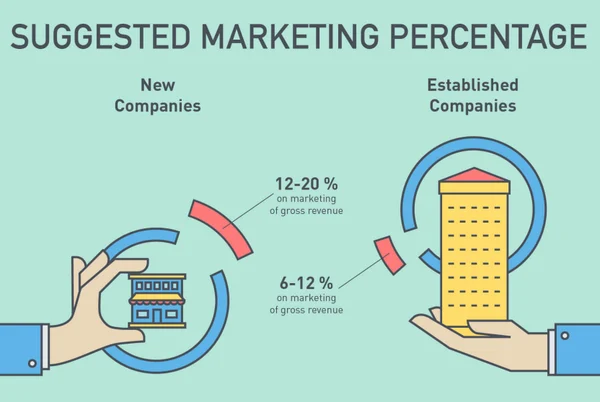
According to the Harvard business review. 7-15% in marketing spend is ideal (If you have incoming revenue). However, one of the difficulties in providing a general marketing budget recommendation is that not all companies are consistent with what they include in their advertising spend.

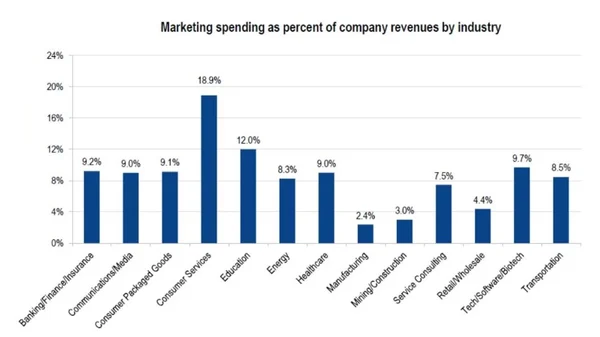
Chart 1.1

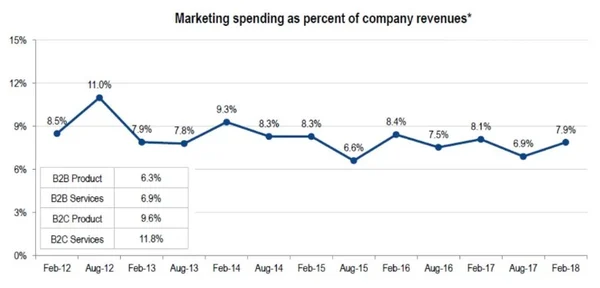
As you see above, marketing spends have varied from 2.4% to 18.9% depending on the industry. We have segregated this data into 4 simple categories which best describes the average marketing spend in categories (see chart 1.2). 

Chart 1.2

Marketing spends as a percentage of revenue tends to fluctuate but generally hovers between 6.5% to 8.5%, with the highest percentage again coming from B2C service companies followed by B2C products.
Source: cmosurvey.org


Related ReadWhy is it Important to Have a Memorable Brand Identity?


Figures and Facts: Digital Marketing & ROI

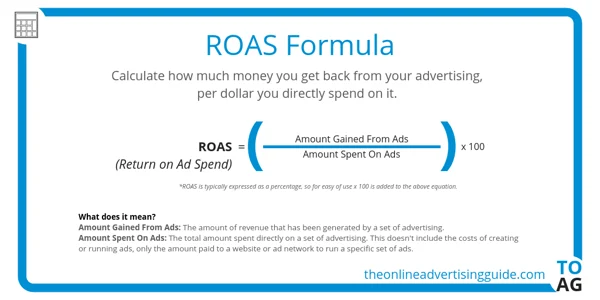
The figures clearly show what should be your average spending on marketing in the coming years. Now the big question is “Which marketing channels are resulting in maximum ROI?”

Source:theonlineadvertisingguide.com

A 2018 study by Gartner reported that marketing leaders planned to spend 29% of their marketing budget on marketing technology (up from 22% in 2017), making it the single largest area of investment for marketers, followed by labour, agencies and paid media.

The world is shifting from traditional media channels to new mediums. Digital spend is increasing and so is the measurable ROI.

Some shocking proofs come from the reports by Forrester Research and eMarketer. Have a look at the estimated allocation of marketing funds offline vs. online and across the digital channels.

  • The marketing budget for online advertising is expected to grow to 45% by 2020.
  • Search engine marketing will capture the largest share of online spend with online display (banner ads, online video, etc.) taking the second-largest share.
  • Online video will represent the highest growth category, with the anticipated investment more than doubling 2016 numbers by 2021.
  • Social media advertising investments will continue to grow, with a 17% CAGR (compound annual growth rate) from 2016 to 2021, and is expected to represent 25% of total online spending in 2018.
  • Mobile marketing has grown to a point that it’s no longer tracked in the forecast and it’s presumed to be considered across all channels.
  • Digital marketing is pacing at an 11% CAGR between 2016 and 2021 with the biggest growth occurring in online video.
  • Investment in paid search, display advertising, social media advertising, online video advertising and email marketing is predicted to account for 46% of all advertising by 2021.

A thorough analysis of this report has given us a key insight – email marketing still leads the way with the highest percentage ROI, with social media marketing following closely behind.

How to distribute your marketing budget across channels

Source:bearfoxmarketing.com

Marketing technologies and automation are proving effective at bringing together the most effective marketing tactics (email marketing, organic search, social media marketing and content marketing) to achieve better results.

For a better understanding, we have elaborated the marketing spends on different metrics. Let’s imagine there is a company called ABC Pvt Ltd.

Marketing head, Ms XYZ has set the next year’s revenue goal already and now she is looking at different marketing channels to gather maximum ROI through her marketing spends.
Note: ABC Pvt Ltd. is a B2C company. Which has decided to keep Rs. 1,000,000 as next year’s marketing budget.


Metrics
Revenue Goal 10,000,000
Marketing spend from total revenue 10.00%
Your Marketing Budget 1,000,000


Marketing Spend Bifurcation Projected Spend Percentage of Marketing Budget
Inbound Marketing 300,000 30%
Website 100,000 10%
PPC 250,000 25%
TOTAL SPEND 650,000 65%
Remaining Marketing Budget 350,000 35%


Now that a proper Marketing Budget bifurcation is plotted for the next year. It’s time to further dissect each metric.

Inbound Marketing, website design and development and paid marketing will play major roles in driving your brand bandwagon. Let’s look at each of them one by one:


Inbound Marketing

Inbound Marketing will be your main channel where you can expect a great ROI. Inbound is the process of generating leads organically, nurturing those leads, and closing them into customers. It’s a natural and organic approach to lead generation and client retention. The goal is to identify a specific number of qualified leads (MQLs) that are highly fitted and highly engaged in your marketing activities which can be passed to the sales team each month.


Inbound Marketing expenses

  • 12-Month marketing plan
  • Buyer persona development & research
  • Landing page development
  • CTAs (call to action)
  • Email nurturing/automation
  • Survey forms
  • Contact/list building & segmentation
  • Content marketing plan
  • Search Engine strategies & Optimisation
  • Social media strategies & Optimisation
  • Weekly Blogging
  • Video publishing
  • Reviewing analytics & KPIs
  • Online Reputation Management
  • Consultancy or agency fees

Projected Annual Spend: Rs. 300,000


Why this requires your special attention is because Key Performance Indicators (KPIs) can save a lot of money and make your marketing spend efficient. This is a key insight given by key marketers and industry veterans. Let’s have look.

Break down your annual revenue goal into average revenue per customer. The average revenue per customer will include the cost of acquisition, retention cost and the cost associated with the product or service.


Sr. No.

Business Metrics
A1 Annual revenue goal 10,000,000
A2 The average revenue per customer 50,000
A3 How many MQLs do you need to create 1 SQL? 10
A4 How many SQLs do you need to create 1 Opportunity? 3
A5 How many Opportunities do you need to close 1 deal? 2


Sr. No. Your KPI Goals
B1 Total no. of customers you need (A1/A2) 200
B2 Total no. of Opportunities needed 400
B3 Total no. of SQLs needed 1200
B4 Total no. of MQLs needed 12000


Ms XYZ is a wise woman and she is not mass-targeting because she knows that to fulfil her next year’s revenue goal she only needs to target 12,000 Marketing Qualified Leads (MQLs).

MQLs will come to the website to see the products and services. So, a direction towards website construction and maintenance is definitely worth some time.


Related ReadHow to Generate Leads for Your Business via Inbound Marketing?


Website

Website efforts should focus on bringing in higher conversion rates. If you have a poorly performing website, it’s time to reinvest in a modern & newly developed one to drastically improve conversion rates. If you have a recently developed website, continuous improvement is not only suggested, it’s necessary, to constantly give a better experience to your users.


Website building and maintenance expenses

  • UI/UX research
  • Wireframing pages
  • Website copywriting
  • Mockups and design
  • Responsive website development
  • Responsive/mobile testing
  • Migration of existing content
  • Launch & QA check
  • Site hosting/domain hosting
  • Consultancy or agency fees

Projected Annual Spend: Rs. 100,000


Though Inbound and website are vital in the overall plan, they are more subtle in approach. Ms XYZ is patient to see results from both the mediums. But in this era of cut throat competition, patience might not benefit like it used to before.

In a 2018 report from Hanapin Marketing, 62% of respondents said they planned to increase their PPC budget in the next 12 months. In comparison to previous years, Google again leads the way, with 78% of those surveyed planning to increase their Google Ads budget.


Pay-Per-Click (PPC)


Pay-Per-Click is the purchasing of ads on various platforms to reach new target leads. Whereas inbound marketing is built on the idea of organic traffic from people finding you on their own, sometimes it takes several months for organic to pick up speed. Organic together with a boost from PPC will work wonders for your marketing efforts. PPC can take many forms, like images, text, videos, etc.

PPC expenses

  • Google
  • Facebook
  • Instagram
  • LinkedIn
  • Other platforms such as Quora, Pinterest, Snapchat, etc.
  • Youtube
  • Campaign planning
  • Keyword analysis
  • Performance review and recommendations
  • Consultancy or agency fees

Projected Spend: Rs. 250,000


Online media is not limited to Inbound, Website and PPC. A plethora of space is available for innovation. So keep looking. Plus, Ms XYZ knows that there is still some fire left in traditional media. And for which she has already kept 35% marketing budget aside.

Traditional Media expenses

  • Flyers
  • Brochures
  • Paper Inserts or Ads
  • Events & Conferences
  • Ad-hoc work
  • Billboards & Banners
  • Radio/TV
  • any other ad or marketing service you can think of!

Projected Spend: Rs. 350,000

The digital services have been given more importance since they are 100% trackable and proven. Now that Ms XYZ has exhausted her whole budget, it’s time to see where does she get the most bang for her buck!


Closing thoughts…

Why do we suggest digital spend more than traditional has a lot to do with the cmosurvey.org report. Which shows the sharp contrast between digital growth and offline decline.

Digital marketing spends, by comparison, has consistently grown by double-digit increments year after year. This means what used to be spent on radio, television, and newspaper is now being spent on search, email, and social. And this trend is expected to continue for the next several years.

What is the Difference Between a Brand and a Product?

Popular products can become brands and brand names can be used to refer to popular products. Sounds confusing?

This article will provide a clear understanding and differences between a brand and a product. However, before directly diving into the difference between brand and product let’s know some basic stuff.


The Fundamental Difference is “Emotions”

Products perform a function. They exist to serve a purpose or fulfil a need. Hence, it can be said that products have rationale.

Alternatively, if we further simplify products, then we can say that a product is something that is in a physical form or a service made available by the companies in the market for sale.


Products have differentiation in terms of size, colour, shape, packing, features, purpose and the business it comes from. Companies use various aspects to endear their products to potential customers. Examples of products include soap, ice cream, hair oil, services like salon, hospitality banking etc.

On the other hand, Brands have “Emotionale” and are quite different from products because they don’t just cover a customer’s needs; they fulfil a customer’s aspirations. A promise is associated with a brand.

In other words, it can also be said that a brand is the image of a specific product in the minds of the customers. Examples include Audi, KFC, Coca Cola, etc.

Now that we know about products and brands let’s deep dive to explore both further.

Companies build Products and Consumers build Brands

A product is made and sold by a company and purchased and used by a customer. While companies represent brands, customer perceptions and expectations build them. This here is one of the biggest differences between brands and products.


For example, KFS’s product is fried chicken. Its umbrella brand is KFC, and each product like a chicken bucket or chicken wings have their specific names to distinguish the various KFC made chicken products from one another. Without a product, there is no need for a brand.

Image source: KFC Official Website

Brands own a distinguished Identity, but products are common

When Google first hit the Internet with a search engine it was an instant hit among consumers because it helped them find information online quickly. However, the Google brand didn’t become meaningful to consumers until people had a chance to use the Google search engine product.


Through consistent reliable experiences, consumers began to trust that the Google brand could deliver faster and better information online. Today, the word “Google” is used as a verb!

Bing, Yahoo or Google all serves the same purpose but people trust Google when it comes to searching for information.

If consumers think that the two products offer the same benefits, then products with low emotional involvement are easily replaced. For example, a detergent powder is easily replaced if it is not available at the time of purchase.

Brand design – logo, name, personality, colours are never the same of two brands however two soaps or two detergent can look and smell similar to each other. Branding and design creates a huge difference in identities of both brands and products.


Also, know Why is it Important to Have a Memorable Brand Identity?

Brands Stand Out, but products disappear in the crowd

Remember panoramic and polaroid cameras? With the introduction of digital cameras and more recently mobile phone cameras, the old products are becoming obsolete. The same happened to VHS players, DVD players with the introduction of iPods.

Whereas, brands like Sony and Apple are still there in the market by offering different products.

Products and Brands have Different Life Cycles

Consider Facebook as an example. When Facebook first appeared on digital screens, it offered a social feed of friends and relatives. That product was an instant hit among friends and family.

Today, if Facebook launches a new service, people will quickly respond because they trust Facebook. Now, Facebook has made sure that even if the social media platform shuts down, Facebook as a brand will stand still.

It is noteworthy to highlight that brands and products appear similar to many, but a more in-depth analysis demonstrates the difference between brand and product.

So, now you have a clear understanding of both. You can read about making your own brand identity through our latest blog on ‘What are the Steps to Create a Recognisable Brand Identity’ or talk to our team for brand design services.


For more articles please visit our advertising and marketing blog.

To grow your business, connect with us