Branding in the hospitality industry
Key Takeaways
- Hospitality is not just about the space you offer. It is about the feeling people associate with that space.
- In co-living, that feeling matters even more because the brand becomes part of everyday life.
- Strong branding in the hospitality industry connects strategy, identity, communication and experience around one clear emotional truth.
- As the co-living market grows, similar rooms, amenities and locations make emotional differentiation more important than ever.
- Youthville’s shift to Where You Belong shows how a hospitality brand can move from describing what it offers to owning what it means to its residents.
- The strongest hospitality brands do not just give people somewhere to stay. They give them somewhere they feel they belong.
Beyond the Stay: What Makes a Hospitality Brand Feel Like Home?
A room. A bed. Wi Fi. Meals. Housekeeping. Security. On paper, these are the things people look for when choosing a place to stay. But ask them what they remember, and the answer is rarely a list of amenities. They remember how a place made them feel.
That is the real challenge of hospitality branding. People may choose a property for what it offers, but they build a relationship with a brand because of what it means to them. And as the hospitality and co-living market becomes increasingly competitive, that emotional difference matters more than ever.
Hospitality Branding Starts With a Question
A room. A bed. Wi Fi. Meals. Housekeeping. Security. On paper, these are the things people look for when choosing a place to stay. But ask them what they remember, and the answer is rarely a list of amenities. They remember how a place made them feel.
That is the real challenge of hospitality branding. People may choose a property for what it offers, but they build a relationship with a brand because of what it means to them. And as the hospitality and co-living market becomes increasingly competitive, that emotional difference matters more than ever.
Hospitality Branding Starts With a Question
Good branding in the hospitality industry does not begin with colours, logos or a tagline. It begins with a question: What should people feel when they experience this brand?
The answer shapes everything that follows. The way the brand speaks. The way its spaces look. The stories it tells. The experiences it creates. The promise it makes and, most importantly, the promise it keeps.
This is where a strategic approach becomes essential. A strong hospitality brand needs more than attractive communication. It needs a clear thought that can hold every part of the brand together.
The Youthville Question
Youthville gave us an interesting branding challenge. As a co-living brand built for young Indians, it already offered the functional essentials: thoughtfully managed spaces, safety, food, housekeeping, Wi Fi, community and more.
But the bigger question was not What does Youthville offer? Rather, what does Youthville mean to the person living there?
That shift in thinking became the starting point for Seagull’s work with the brand.
The opportunity was to move beyond describing Youthville as a place to live and articulate the feeling that sits at the heart of the experience. For someone leaving home for the first time, moving to a new city or simply looking for a space that feels more like their own, that feeling is belonging.
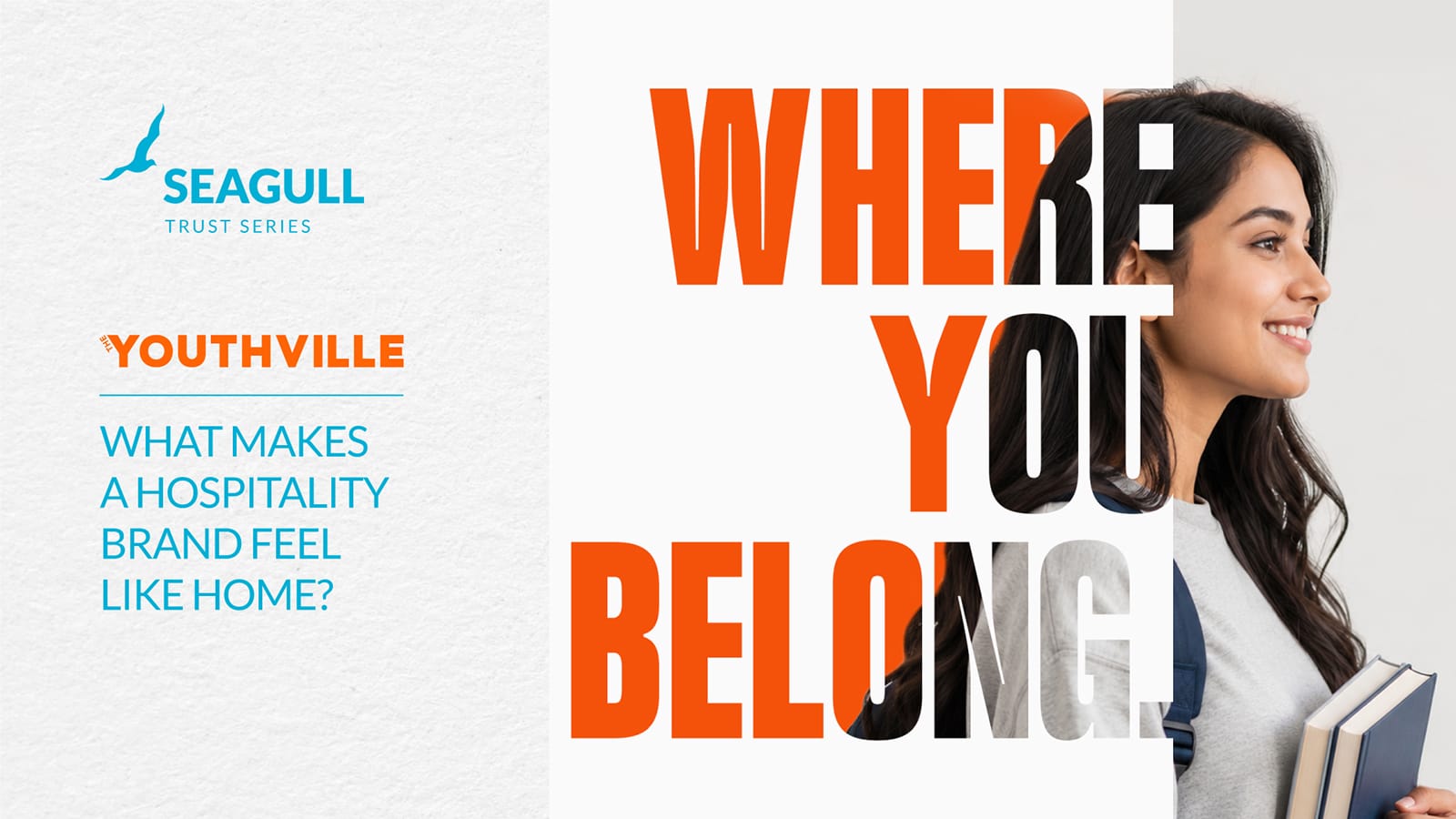
And that thought became Where You Belong.
From a Tagline to a Brand Idea
The power of “Where You Belong” is that it does not simply describe a property. It gives Youthville a larger emotional territory to own.
It speaks to the student finding their people in a new city, the young professional finding comfort between busy days, the parent looking for reassurance, and the resident turning a room into their own little world.
For Seagull, the task was therefore not simply to create a new line. It was to build a clearer brand thought around what Youthville could mean in everyday life.
That is the difference between creating communication and creating a brand idea.
Where Design Meets the Feeling
Once the thought is clear, design has a role to play. But design should not exist simply to make a hospitality brand look good.
Strong hospitality design services translate the brand’s personality into something people can see and experience. From visual identity and spaces to digital touchpoints and everyday communication, every element should feel like it belongs to the same world.
For Youthville, this meant allowing the idea of belonging to extend beyond the words. The identity, communication and resident experience needed to work together so that “Where You Belong” felt like an experience, not just a statement.
Hospitality Happens Every Day
A hospitality brand is built in the small moments. The first time someone discovers it online. The way a room feels on the day one moves in. The ease of raising a service request. The people they meet. The food they share. The support they receive when they need it.
That is why hospitality design services cannot be separated from strategy, and why marketing cannot be treated as an afterthought.
A hospitality marketing agency has to understand the larger brand story before deciding what to communicate. Every campaign, social post, property interaction and resident message should strengthen the same central idea.
Digital Is Where the Relationship Begins
For today’s hospitality audience, the first experience with a brand often happens long before they enter the property. It happens on Instagram, Google, a website, a reel or a search result.
A hospitality digital marketing agency therefore has a bigger role than simply driving clicks. Digital communication should create familiarity, answer questions, build trust and make the brand feel relevant before someone ever walks through the door.
For a brand like Youthville, where the audience is young, digital is also where personality can come alive. The challenge is to speak their language without losing the larger brand thought.
Why Co-Living Needs Stronger Branding
The co-living market is no longer simply about putting a bed, Wi Fi and a few amenities under one roof. As the category matures, brands begin to look increasingly similar on paper.
This is where co-living market growth creates an interesting branding challenge. More options give consumers more choice, but they also make differentiation harder.
When functional benefits become easy to match, emotional meaning becomes harder to copy.
That is why branding in the hospitality industry needs to move beyond what a property has and focus on what people feel they are becoming part of.
Building Brands That Mean More
The strongest hospitality brands do not simply sell rooms, residences or stays. They create a feeling people want to return to.
That is where the role of a hospitality branding agency becomes more strategic. The job is to find the thought that can give the brand direction, then make sure that thought survives across every experience.
For brands operating in the co-living market growth story, this becomes even more important. The category will continue to evolve, but the brands that understand their emotional role in people’s lives will have a stronger reason to be remembered.
For businesses looking for hospitality branding agency india expertise, the question should therefore go beyond Can you create a good identity? It should be Can you find what this brand should stand for?
Because a logo can identify a place. A campaign can bring people to it. But a strong brand can make them feel that they belong there.
For Youthville, that answer became Where You Belong.
And perhaps that is what hospitality branding is really about: not simply giving people somewhere to stay, but giving them a place that feels like theirs.
FAQs
- What does a hospitality branding agency do?
A hospitality branding agency develops the strategic idea, positioning, identity and communication system that shapes how people experience a hospitality brand. - Why is branding important in hospitality?
Strong branding helps hospitality businesses move beyond functional features and create an emotional reason for people to choose and return to a brand. - How is digital marketing different for hospitality brands?
A hospitality digital marketing agency connects digital communication with the larger brand experience, helping businesses build awareness, trust, and consideration across platforms. - What are hospitality design services?
Hospitality design services can include visual identity, communication design, spatial branding, and digital experiences, all shaped around the brand’s core idea. - Why is branding important for co-living brands?
As the co-living market becomes more competitive, branding helps businesses differentiate through experience and emotional connection rather than amenities alone. - Why should a hospitality business work with a strategic branding partner?
A strategic partner brings structure to brand decisions, ensuring that positioning and communication work towards one clear idea. - What role does a hospitality digital marketing agency play?
A hospitality digital marketing agency helps translate the brand into digital experiences that attract audiences, build trust, and maintain consistency across platforms.
Author Bio
Katyayani Kelkar
With over four years in the creative ecosystem, Katyayani has worked across a diverse mix of industries, shaping brands at different stages of their journey. She blends strategic thinking with storytelling to help brands find their voice, craft narratives that resonate, and build communication that not only sells but also scales reach. At Seagull, she focuses on turning ideas into stories that stay and strategies into impact that help brands soar higher.