From Supplying Dental Products to Building Confidence Through Hygiene.
Key Takeaways
- How consumer co-creation helped Seagull uncover ORO’s larger business opportunity.
- What dentist interactions revealed about hygiene, patient safety and professional credibility.
- How three Brand Wings routes shaped ORO’s strategic direction.
- How Seagull’s Wings for Profit methodology connected consumer insights with brand purpose.
What Does a Dental Products Brand Really Sell?
Dentistry is built on trust.
Patients trust dentists with their health, comfort and smiles. But how much of that trust is influenced by what happens before the treatment even begins?
A hygienic clinic, sterilised instruments and proper infection-prevention measures all shape how patients perceive their dentist.
For ORO, a brand in the dental consumables and instruments category, this presented an opportunity to play a bigger role.
How could ORO become more than a supplier of dental products?
Through its Wings for Profit methodology, Seagull set out to understand the dental fraternity, uncover its emotional drivers and identify what dentists truly expected from the brand.
Understanding the Dentist Beyond the Practice
Before defining a brand, we need to understand the people behind it.
Seagull began with conversations with dentists across different cities, exploring their professional ambitions, everyday challenges and expectations from the dental industry.
A few concerns stood out:
- Growing competition and price-led treatment offerings.
- Limited platforms for mentoring and guiding young dentists.
- The need for continuous learning and technological upgrades.
- Concerns around unethical practices and inconsistent protocols.
- The growing importance of clinic hygiene and infection prevention.
This understanding forms the foundation of effective healthcare branding strategies: knowing what matters to customers beyond the product itself.
Three Wings. One Bigger Brand Opportunity.
Building a meaningful brand takes more than a strong strategy. It takes the right thinking, a distinct identity and communication that carries the brand forward. Here’s how Seagull’s three wings come together.
WINGS FOR PROFIT
Finding What ORO Could Truly Stand For.
Seagull began by understanding the dental fraternity, its challenges and its emotional drivers. Through interactions, buyer personas and OET research, we uncovered a larger opportunity for ORO: helping dentists maintain infection-free clinics and build patient confidence.
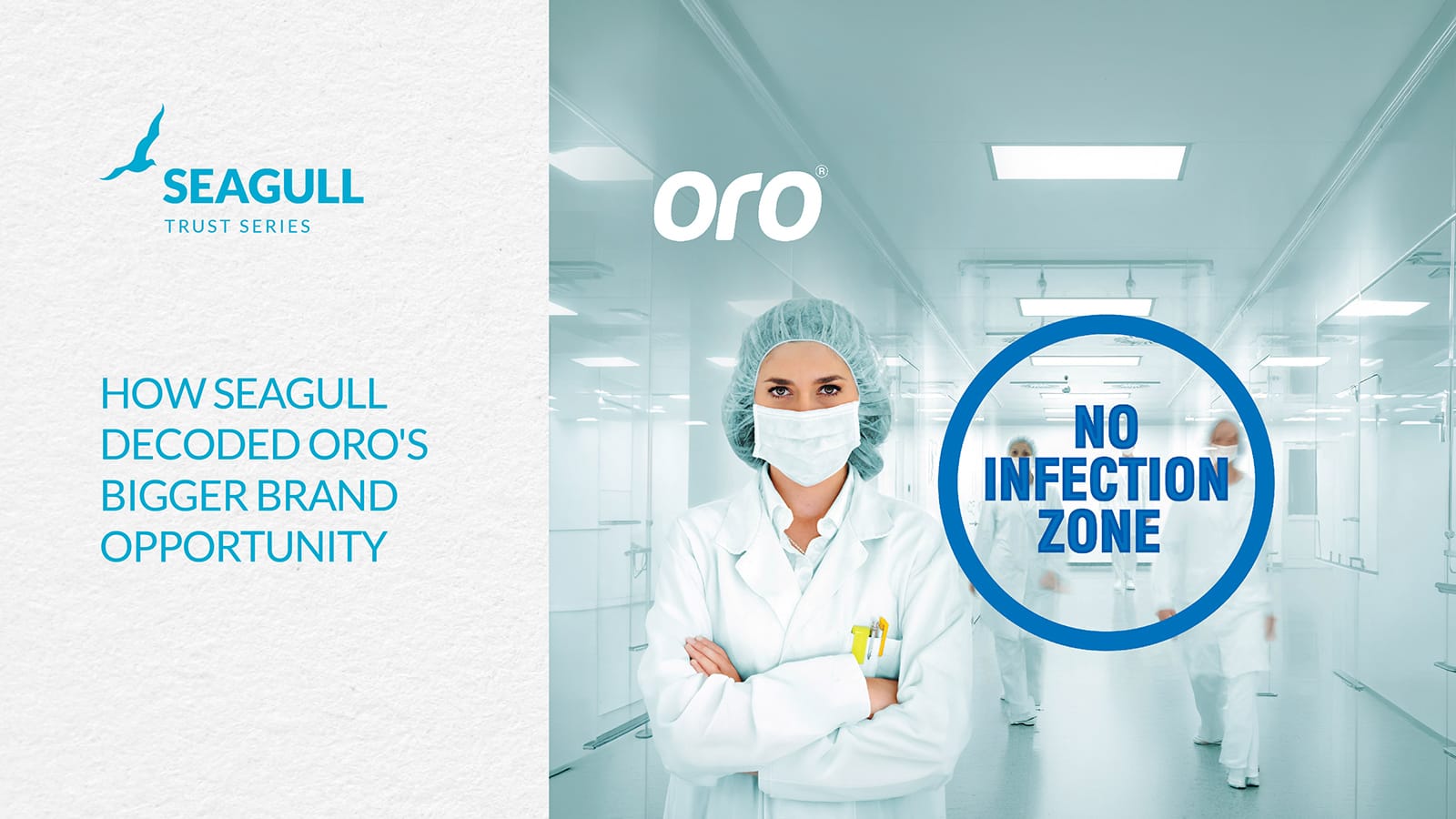
This strategic exploration led Seagull to define ORO’s Branding Idea: No Infection Zone. A clear expression of the brand’s commitment to hygiene, infection prevention and creating safer clinical environments for dentists and their patients.
WINGS FOR DESIGN
Giving the Brand’s Purpose a Distinct Expression.
A strong branding idea needs a clear identity. With hygiene, safety and professional credibility emerging as key territories, the strategic foundation could guide how ORO’s purpose is expressed through its visual identity and brand language.
This strategic thinking is equally important for a healthcare marketing agency developing meaningful brand experiences and for a pharmaceutical marketing agency building a distinct brand proposition.
WINGS FOR REACH
Taking the Branding Idea to Its Audience.
A brand’s purpose becomes meaningful when it reaches the people it is meant for. The strategic direction provides the foundation for consistent communication that connects ORO with the dental fraternity and reinforces its larger role in supporting hygienic dental practices.
For a healthcare marketing agency, this means creating communication rooted in genuine audience needs. Similarly, a pharmaceutical marketing agency must understand its audience before translating a brand’s purpose into relevant communication.
From Products to Purpose
Here’s an important question at the heart of Seagull’s Wings for Profit methodology:
What business are we really in, and what are we really selling?
For ORO, the answer went beyond dental consumables and instruments.
Its rational offering included products such as sterilisation accessories, masks, caps, gowns, kits, denture boxes, suction accessories and handpieces.
But what did these products mean to dentists?
They represented an opportunity to maintain hygienic practices, strengthen patient confidence and build a more credible clinic.
This is where healthcare brand design services and strategic brand thinking come together: translating functional offerings into a proposition people can connect with.
Conclusion
What began as an exercise to understand a dental products brand uncovered a much larger opportunity.
Through dentist interactions, buyer personas, emotional research and three Brand Wings routes, Seagull helped ORO explore a more meaningful role in the dental fraternity.
Because a strong brand isn’t defined only by what it offers. It’s defined by what it helps its customers achieve.
And for ORO, that opportunity began with hygiene and the confidence it inspires.
Because every confident smile begins with trust.
FAQ
- How did Seagull help ORO build its brand strategy?
Seagull used its Wings for Profit methodology, combining dentist interactions, buyer personas and OET research to identify ORO’s larger brand opportunity. - What was the key insight behind ORO’s brand strategy?
The research revealed that clinic hygiene significantly influences patient perception and confidence, making it an important emotional territory for ORO. - What is an Obvious Emotional Truth (OET)?
An OET is an underlying consumer belief or emotional need that helps a brand connect its functional offerings with what customers truly value. - What were the three Brand Wings routes explored for ORO?
Being Seen as Hygienic, Providing Safety and Retaining Patients. Each explored a different emotional benefit associated with maintaining hygienic dental practices. - What is Seagull’s Wings for Profit methodology?
It is a consumer co-creation process comprising Brand Challenge, Brand Wings and Brand Flight Map, helping businesses connect consumer insights with their larger brand and business objectives. - Why is consumer research important for healthcare brands?
It helps brands understand the needs, motivations and challenges of their audiences, creating more relevant positioning and communication. This is a key consideration when choosing a healthcare branding agency.
Author Bio
Katyayani Kelkar
With over four years in the creative ecosystem, Katyayani has worked across a diverse mix of industries, shaping brands at different stages of their journey. She blends strategic thinking with storytelling to help brands find their voice, craft narratives that resonate, and build communication that not only sells but also scales reach. At Seagull, she focuses on turning ideas into stories that stay and strategies into impact that help brands soar higher.