Inside a Brand Strategy Agency: What the Work Actually Looks Like
Key Takeaways
- The real role of a branding agency: less about logos, more about defining the emotional and behavioural direction a business commits to.
- Structure over guesswork: strong branding agency services follow a sequence, strategy first, design second, communication third.
- The right moment to bring one in: knowing why hire a branding agency matters as much as choosing which one.
- Strategy leads, execution follows: every deliverable, from packaging to campaigns, traces back to one defined emotional truth.
- Consistency compounds: businesses that work with a structured agency build recognition that lasts well beyond a single campaign.
Most people describe a branding agency using words like creative, colourful, or artsy. Ask someone to explain what a branding agency actually does in a single sentence, and the answer usually stalls at logos and taglines. The truth sits several layers deeper, in research, behavioural design, and structured decision-making that shapes a business long before any visual gets made.
Beyond the Moodboard: What a Brand Strategy Agency Actually Handles
Strategy work starts with questions, not colours. Who does the business currently win, and lose, against. What do customers say in their own words, before marketing rewrites it for them. Where does the category leave emotional territory unclaimed.
At Seagull, this stage happens through Wings for Profit (W4P): leadership interviews, customer conversations, and competitor scans that surface a business’s Obvious Emotional Truth (OET), the belief a buyer holds that makes one brand feel different from ten similar options. Every later decision, visual or verbal, traces back to this single foundation.
Why Hire a Branding Agency, and When?
The honest answer to why hire a branding agency involves needing a decision-making system once growth outpaces internal clarity, when the sales team, the founder, and the marketing manager each describe the business a little differently.
Common triggers include a growth plateau despite steady effort, messaging that shifts with every new campaign, a rebrand after years of drift, or a new product entering an unfamiliar category. In each case, an agency brings a structured process instead of another round of internal opinion.
What Branding Agency Services Actually Include
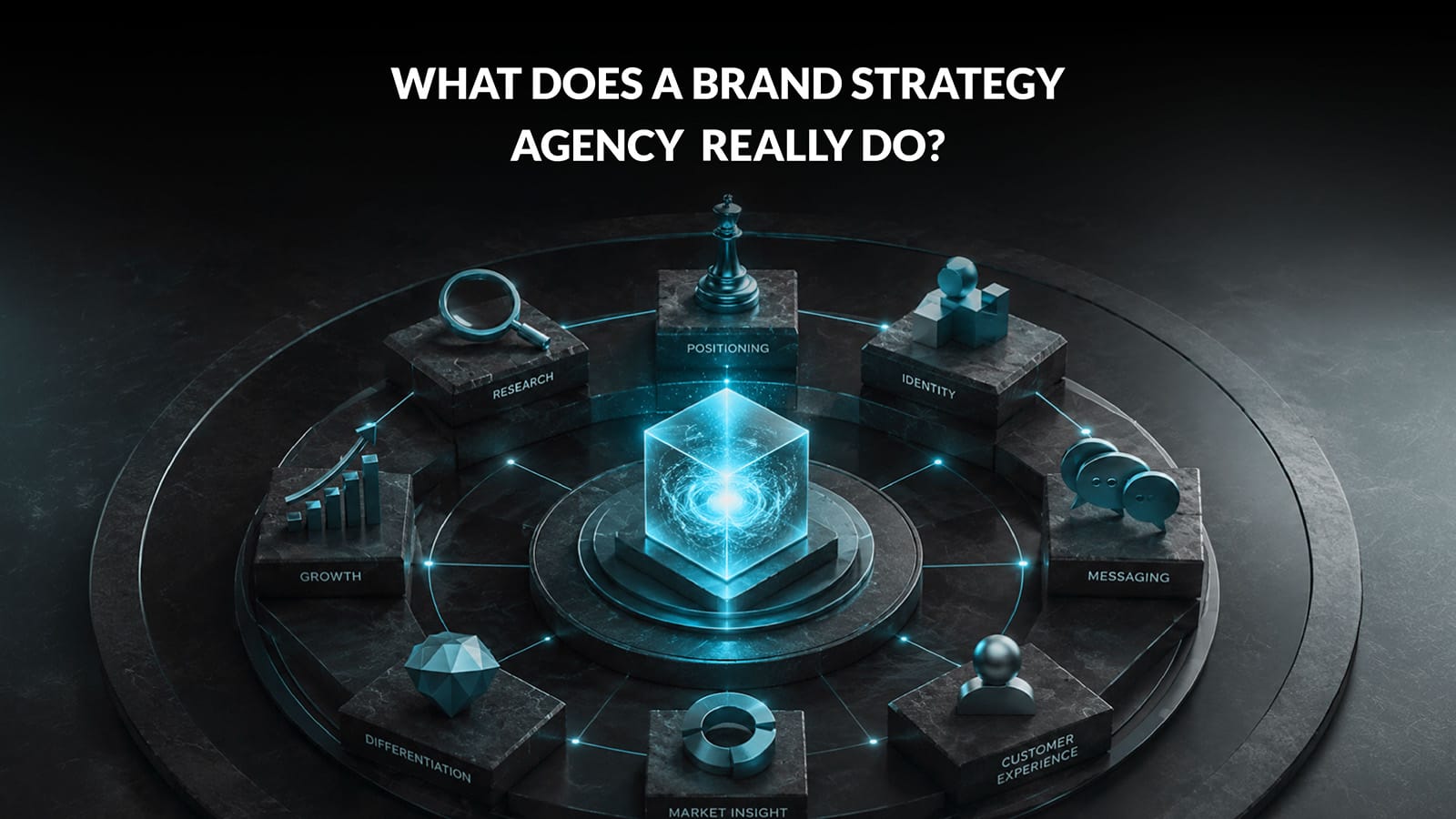
Branding agency services tend to fall into four connected areas, each building on the one before it.
- Brand strategy and positioning: uncovering the Obvious Emotional Truth that anchors every future decision.
- Brand identity and brand design services: turning that truth into a visual and verbal system, logo, packaging, tone of voice, applied consistently across every touchpoint.
- Communication and campaign planning: building messaging that stays coherent across digital, retail, and traditional channels.
- Brand launch strategy: a focused plan for introducing a new brand, product, or category entry to the market with intent, rather than a scattered set of one-off announcements.
A Week Inside the Work
Think of a founder walking into week one expecting mood boards. Instead, the first days involve interviews with sales teams, conversations with actual customers, and a scan of every competitor on the shelf or the search results page.
Week two turns those conversations into patterns, the emotional territory a business already owns, often unnoticed, and the gaps competitors have left open. Only once that foundation gets tested does a single visual get drawn. This order rarely matches what founders expect walking in, and it is exactly why the results tend to outlast a single campaign.
Why Structure Beats Talent Alone
Individual creative talent matters, yet talent alone rarely protects consistency across teams, seasons, and campaign managers. A structured sequence, strategy, design, then reach, gives every new hire, every new agency partner, and every new platform the same foundation to build from. Consistency becomes a system rather than a personal habit that leaves with whoever built it.
Choosing the Right Agency, in Pune or Anywhere Else
At Seagull Advertising, a branding agency in Pune working with founders across real estate, FMCG, and consumer categories, this structured approach shows up in every engagement, from the first leadership workshop to the final campaign rollout. The businesses that gain the most tend to arrive with a clear problem and leave with a system, one built to guide decisions long after the engagement ends.
A branding agency, done properly, hands a business a foundation it can build on for years, not a single deliverable that ages out with the next design trend.
FAQs
- What does a branding agency actually take responsibility for?
A branding agency typically owns the strategic foundation of a brand, its positioning, emotional truth, and behavioural rules, along with the visual identity and communication built on top of it. The scope often extends from research through to campaign execution. - Why bring in an outside agency instead of building brand work in-house?
An outside team brings distance from daily operations, along with a structured process tested across many businesses. Internal teams often carry useful product knowledge, while an agency contributes the objectivity and framework needed to turn that knowledge into a coherent brand. - How long do branding engagements typically take?
Strategic foundation work usually spans eight to twelve weeks, followed by a design phase of similar length. Ongoing communication and campaign work continues well beyond that, since a brand keeps needing consistent expression as it grows. - Does an agency handle visual identity as well as strategy?
Yes, visual and verbal identity typically follow directly after strategy is set, translating the emotional truth into a logo, packaging, tone of voice, and design system applied across every touchpoint a buyer encounters. - How is launching a new brand different from managing an existing one?
A launch concentrates strategy, design, and communication into a single, focused window, built around one moment of market entry. Ongoing brand management spreads that same discipline across years, adapting to seasons, competitors, and new products as the business grows.
Author Bio:
Karina Rupani
Five years into the creative hustle, Karina is a senior copywriter at Seagull who thinks in strategy and writes in human. With a reputation for finding the sharpest angle on even the most familiar brief, she has built brand narratives for startups finding their voice and legacy brands redefining theirs.