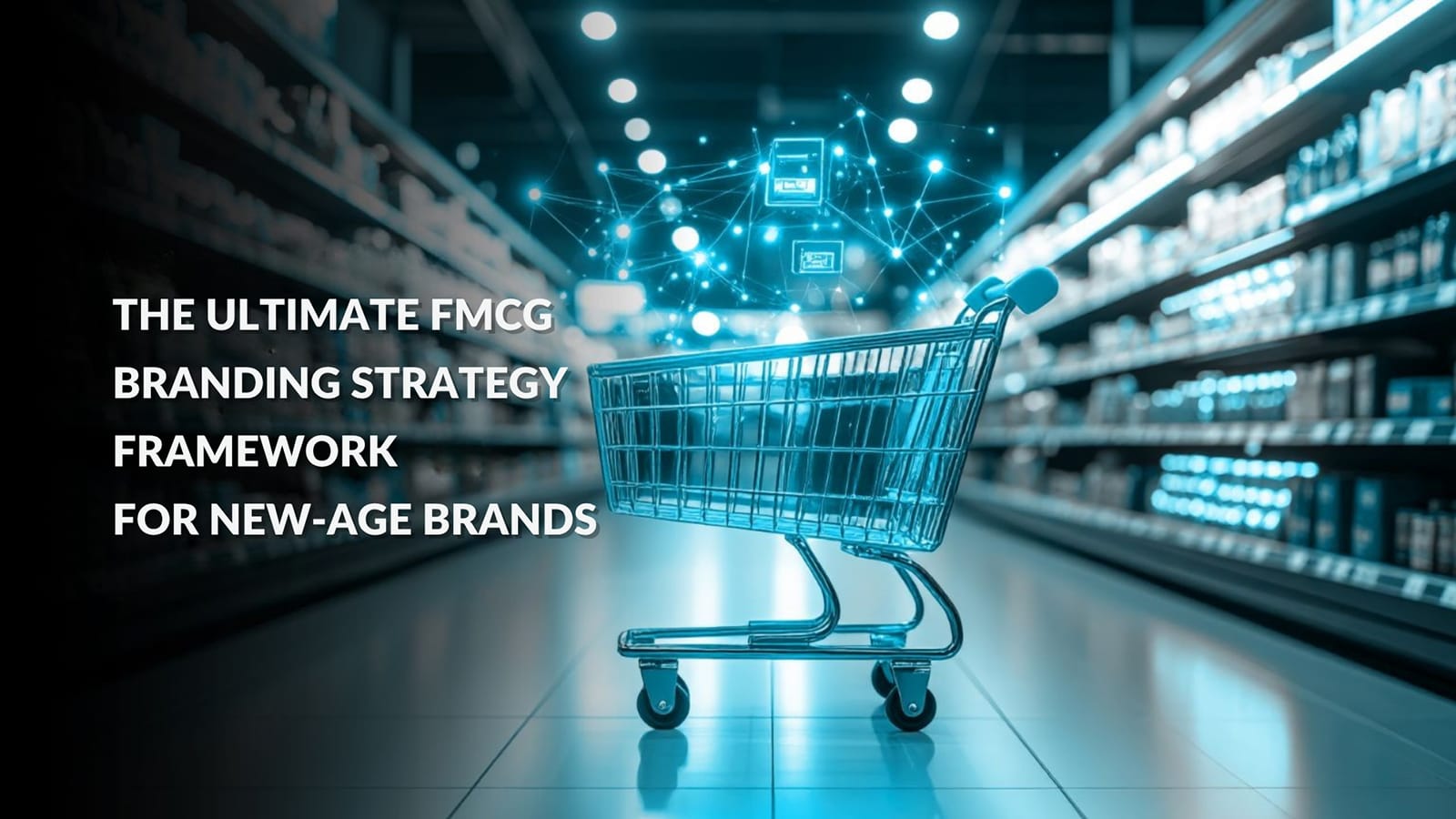
FMCG Branding Strategy That Builds Winning Brands
Key Takeaways
- Three battles, one brand: An FMCG branding strategy earns the shelf, the kitchen, and the habit, in that order.
- Packaging decides fast: Design earns the first three seconds; strategy earns every second after.
- Repeat purchase is the real prize: The strongest brand strategies in FMCG markets turn a first purchase into a default habit.
- Structure scales, flair fades: Consistent brand building strategies for FMCG products compound faster than isolated campaigns.
- New-age speed needs old-age depth: Digital velocity converts attention into loyalty only when strategy leads design, and design leads reach.
FMCG is the most bought category in the world, and often the least remembered brand story. Shoppers pick up soap, snacks, and sauces dozens of times a month, yet ask them to name a brand they truly feel devoted to, and most pause. That pause is the entire opportunity. A sharp FMCG branding strategy turns that pause into recognition, and recognition into a habit worth repeating, purchase after purchase.
The FMCG Paradox: High Frequency, Low Memory
People buy FMCG products more often than almost anything else, yet remember fewer of the brands behind them. A detergent gets used in three months. A biscuit gets finished in three days. Speed of consumption should build familiarity, but familiarity alone rarely builds loyalty.
Category is often the strongest brand in the room, stronger than the label on the pack. Ketchup wins over the specific ketchup brand. Toothpaste wins over the specific toothpaste brand. That is the real competitor most new-age FMCG brands face: the category itself, sitting quietly ahead of the brand next to them on the shelf.
Three Battles Every FMCG Brand Must Win
Every FMCG brand fights the same three battles, whether it sells ghee or gummy vitamins. Win all three, and loyalty follows. Miss one, and the other two lose their power.
Battle One: The 3-Second Shelf
The shelf, physical or digital, gives a brand three seconds to earn a hand reaching toward it. Colour, structure, and typography do the talking before a single word gets read. A pack that looks like ten others around it loses the moment, however good the product inside. This stage rewards visual instinct over reading time. Design becomes the first sentence of the brand story, told in under three seconds.
Battle Two: The 3-Minute Kitchen
The pack gets home. The lid comes off. The product meets its moment, dinner, a wash cycle, a quick snack, and here the brand either confirms its promise or breaks it. This stage rarely gets discussed in brand strategies in FMCG markets, yet it decides whether the second purchase happens at all. A pack can win the shelf and lose the kitchen, and that loss travels fast through word of mouth and reviews.
Battle Three: The 3-Month Habit
Somewhere between the third and the tenth purchase, a product turns into a habit, or gets swapped out on impulse. This is the middle ground where most FMCG brands lose share, and rarely notice the moment it happens. Strong brand building strategies for FMCG products treat this stage as seriously as launch day, building emotional territory, consistent communication, and reasons to stay that go beyond price.
Building the Framework: Strategy Before Shelf, Shelf Before Habit
Seagull’s approach to FMCG brand building rests on three connected stages, Wings for Profit, Wings for Design, and Wings for Reach, moving in a fixed order for a reason.
Strategy defines the emotional territory a brand owns before a single visual gets designed. Design translates that territory into shelf-ready, kitchen-ready, habit-ready assets. Reach carries the brand across digital and physical touchpoints, consistently, so recognition compounds instead of resetting with every campaign.
Skipping the order rarely works. A striking pack built ahead of strategy looks good and says little. A loud campaign built ahead of design spends money to confuse rather than convert.
Why Most New-Age FMCG Brands Plateau
Three patterns repeat across categories. First, brands chase virality ahead of positioning, and a viral moment fades while the underlying brand stays unclear. Second, price becomes the primary lever, and every rupee spent on discounts trains buyers to wait for the next one instead of building loyalty. Third, creative fragments across platforms, a different voice on social media, a different one on packaging, a different one in retail, and the buyer experiences a brand that feels like three separate ones.
At Seagull Advertising, a branding company in Pune working with FMCG and consumer brands across categories, this fragmentation shows up constantly in early conversations with founders. The fix rarely starts with a new campaign. It starts with a single, sharp answer to what the brand actually stands for.
The New-Age Advantage: Speed with Depth
New-age FMCG brands hold an advantage older brands took decades to build: direct access to buyers through D2C platforms, social feeds, and instant feedback loops. That access moves fast, and fast environments reward brands with a settled point of view.
Speed amplifies whatever strategy already exists underneath it. Sharp positioning gets sharper. Weak positioning gets exposed faster than ever. This is exactly why a structured approach matters even more in fast-moving categories. Strategy sets the direction. Design gives it form. Reach gives it scale. Together, they turn a single good idea into a brand people reach for by instinct.
Structure like this turns three seconds on a shelf into three months of habit, and three months into years of loyalty. That is the real win in FMCG.
FAQs
- What is an FMCG branding strategy?
An FMCG branding strategy is the structured plan behind how a fast-moving consumer brand gets positioned, designed, and communicated so buyers recognise it, trust it, and return to it purchase after purchase. - How is FMCG branding different from branding in other categories?
Purchase decisions happen faster, often in seconds, and get repeated far more often than in categories like fashion or electronics. That speed and frequency put pressure on packaging, pricing, and consistency in ways slower categories rarely experience. - How long does it take for an FMCG brand strategy to show results?
Shelf recognition can shift within weeks of a design update. Genuine loyalty, the kind that survives a competitor’s discount, usually builds over two to three purchase cycles, often four to six months for everyday categories. - What makes FMCG brand building efforts successful over the long term?
Consistency across the shelf, the pack, and every touchpoint a buyer sees. Brands that keep their emotional territory steady across seasons and campaigns build recognition that compounds, rather than resetting with every new push.
- Does packaging design matter more than digital marketing for FMCG brands?
Both carry weight, at different moments in the buying journey. Packaging wins the shelf in three seconds. Digital marketing builds the familiarity that gets a buyer to the shelf in the first place. Strong FMCG brands invest in both, guided by one strategy underneath.
Author Bio:
Karina Rupani
Five years into the creative hustle, Karina is a senior copywriter at Seagull who thinks in strategy and writes in human. With a reputation for finding the sharpest angle on even the most familiar brief, she has built brand narratives for startups finding their voice and legacy brands redefining theirs.