Choose the Best FMCG Branding Agency for Growth
Key Takeaways
- Strategy before shelf space: FMCG success begins with a sharp emotional and behavioural brand foundation, not packaging.
- The OET advantage: Winning brands are built on an Obvious Emotional Truth, not product features.
- Consistency creates recall: In FMCG, repetition is not redundancy; it is survival.
- Design is behaviour in disguise: Packaging, language, and visual identity must reflect how the brand thinks, not just how it looks.
- Distribution without distinction fails: Even the best reach strategy collapses without brand clarity.
Framework-led branding wins: Systems like W4P, W4D, and W4R turn chaos into scalable FMCG growth.
The FMCG Game Has Quietly Changed Its Rules
For a long time, FMCG branding was defined by a simple equation: shelf visibility, competitive pricing, and distribution strength. If you were present everywhere, you were assumed to be winning everywhere.
That equation no longer holds true.
Today, FMCG is no longer a distribution-first category. It is a perception-first economy, where the real competition begins much before the product reaches the shelf. It begins in the mind of the consumer, often in less than three seconds of visual and emotional contact.
In this compressed-attention environment, brands are not judged by how much they offer but by how quickly they are understood.
And that shift demands a fundamentally different FMCG branding strategy.
Building From Emotional Clarity, Not Product Logic
Most new-age FMCG brands start with product thinking: ingredients, benefits, pricing, variants. But consumers don’t form relationships with logic. They form relationships with meaning.
This is where the idea of Obvious Emotional Truth (OET) becomes central.
At a foundational level, every FMCG brand must be able to answer:
- What emotional role do we play in the consumer’s life?
- What feelings are we consistently reinforcing?
- Why should this product matter beyond utility?
Without this clarity, branding becomes decorative storytelling. With it, branding becomes behavioural memory.
This is also where strategy stops being a document and starts becoming a direction, a shift that defines modern brand strategies in FMCG markets.
When Packaging Becomes the First Language of the Brand
In FMCG, packaging is not designed. It is communication at the point of decision.
A consumer does not “read” a pack; they scan, interpret, and decide.
Which is why successful FMCG brands treat design as a system, not a surface exercise.
A strong FMCG branding strategy ensures:
- Visual identity is instantly recognisable in cluttered environments.
- Colour, typography, and structure work as behavioural cues.
- Every SKU feels like part of a unified brand universe, not isolated products.
This is where design stops being aesthetic expression and becomes brand behaviour in physical form.
If the brand cannot be identified without reading the name, it is not a design system; it is just packaging.
The Hidden Gap Between Reach and Recall
A common assumption in FMCG growth is that distribution equals success. But presence does not guarantee preference.
Many brands achieve scale but fail to achieve mental availability. They are visible everywhere, but remembered nowhere.
This gap exists because reach is often treated as a media function, not a brand function.
Effective FMCG branding requires alignment between:
- What the brand stands for
- What the brand communicates
- Where and how the brand shows up
Without this alignment, every marketing rupee works in isolation instead of compounding impact.
The real objective is not just to reach. It is repeat recognition with meaning intact, a principle that sits at the heart of strong brand building strategies for FMCG products.
Why FMCG Branding Cannot Be Fragmented Anymore
One of the biggest structural challenges in FMCG today is fragmentation. Strategy is built in one place, design in another, and media in a completely separate ecosystem.
The consumer, however, experiences none of this separation.
For them, the brand is one continuous signal, visual, verbal, and emotional.
This is why disconnected branding efforts often result in:
- High awareness but low recall
- High trial but low repeat purchase
- High visibility but weak loyalty
The solution is not more communication. It is more cohesive.
The Seagull Three-Wings Perspective
At Seagull Advertising, a leading branding company in Pune, FMCG branding is treated as a structured growth system built on three interconnected forces:
- W4P (Wings for Profit): Defines the Obvious Emotional Truth and strategic positioning of the brand
- W4D (Wings for Design): Translates strategy into a consistent visual and behavioural identity system
- W4R (Wings for Reach): Ensures precision-driven visibility that reinforces, not dilutes, brand meaning
When these three operate in sync, FMCG brands stop behaving like products in a market and start behaving like systems in motion.
Final Reflection
The FMCG landscape is no longer rewarding the loudest brands or the widest distributed ones. It is rewarding the most clearly defined ones.
Because in a category where everything looks similar, clarity becomes the sharpest form of differentiation.
And in that clarity lies scale, recall, and ultimately, growth.
A strong FMCG branding strategy is no longer about standing out on the shelf.
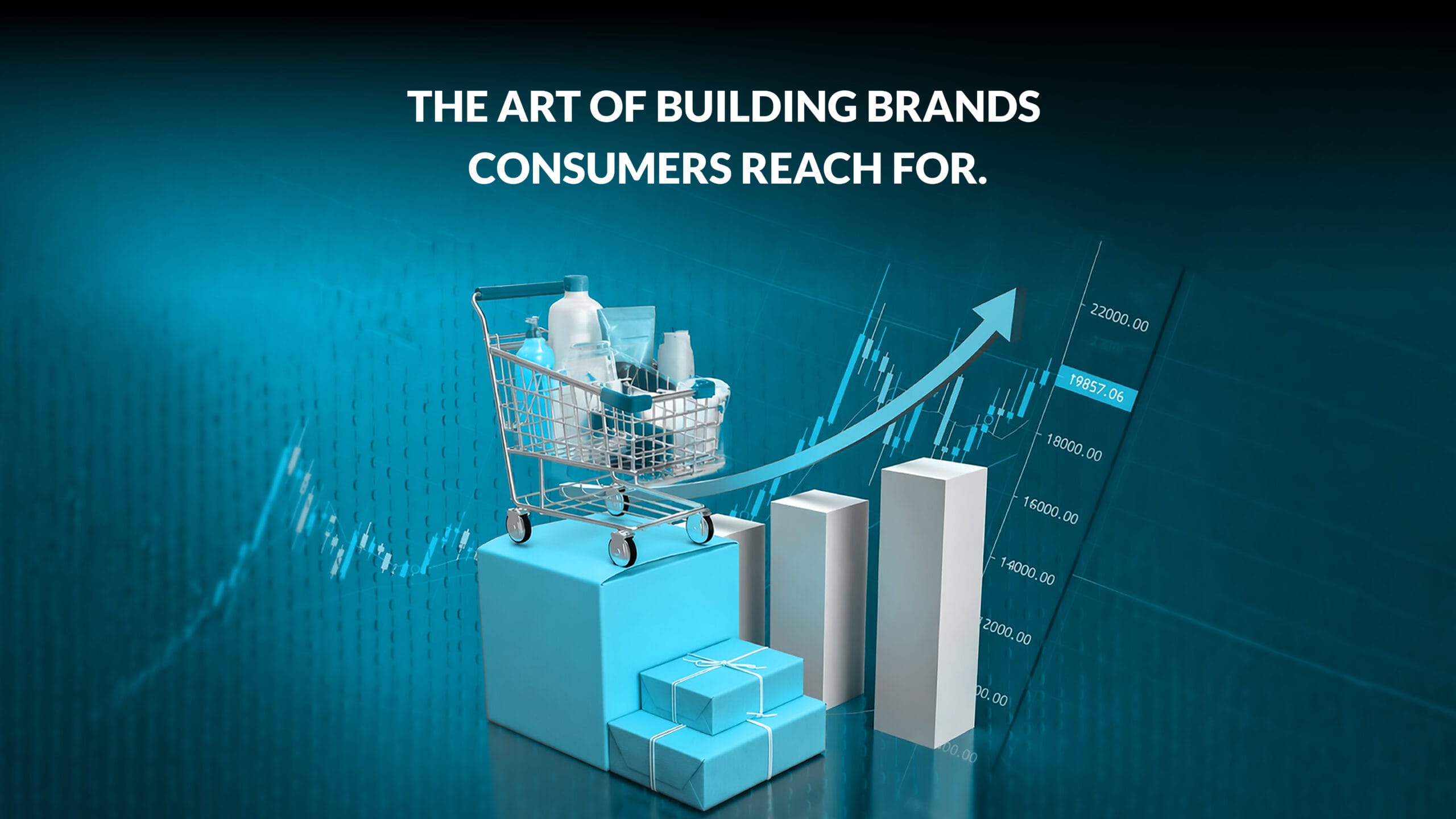
It is about becoming the brand the mind reaches for without hesitation.
Author Bio
Katyayani Kelkar
With over four years in the creative ecosystem, Katyayani has worked across a diverse mix of industries, shaping brands at different stages of their journey. She blends strategic thinking with storytelling to help brands find their voice, craft narratives that resonate, and build communication that not only sells but also scales reach. At Seagull, she focuses on turning ideas into stories that stay and strategies into impact that help brands soar higher.